
Let’s face it, making good decisions can make or break your success as a leader. The art of decision-making involves a complex interplay of cognitive processes, emotional intelligence, risk assessment, and strategic thinking. In simple words, it’s not just about picking between options, but about using your brain and gut feeling while thinking about risks and the big picture.
That’s why I turned to books for guidance, and discovered some real gems along the way. I’ve put together some amazing books that will help you become better at making decisions. These books tap into how our minds work, why we behave certain ways, and what successful leaders have learned the hard way.
The books I’ve picked are packed with real stories and practical tips from experts who’ve been there, done that. You’ll find advice you can actually use, no matter what business problems (or even personal issues) you’re facing.
These books draw from various disciplines, including psychology, behavioral economics, neuroscience, and management science, to provide actionable strategies that can be applied in various business contexts.
The Decision-Making Books Reviewed on this Page
Top Books on Decision Making
Here is our list of Top Books on decision making for business leaders;
1. “Thinking, Fast and Slow” by Daniel Kahneman
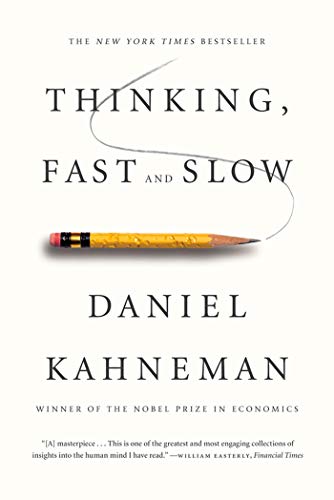 Thinking, Fast and Slow
In this groundbreaking book, Kahneman, a Nobel Prize-winning psychologist, explores the dual syst...

This seminal work by Nobel Prize-winning psychologist Daniel Kahneman explores the two systems of the human mind – the fast, intuitive “System 1” and the slow, deliberative “System 2”.
Kahneman provides deep insights into the cognitive biases and heuristics that often lead to poor decisions, and offers strategies for business leaders to harness the strengths of both systems to make more rational, effective choices. Understanding the interplay between these two modes of thinking is crucial for leaders navigating complex, high-stakes decisions.
2. “Decisive: How to Make Better Choices in Life and Work” by Chip Heath and Dan Heath

The Heath brothers offer a practical, research-backed framework to help leaders overcome common decision-making traps like narrow framing, confirmation bias, and overconfidence. By widening their options, reality-testing their assumptions, and considering multiple perspectives, the book empowers readers to make smarter, more informed choices.
Filled with relatable examples, “Decisive” equips business leaders with a systematic approach to tackle complex decisions with greater clarity and confidence.
3. “The Art of Choosing” by Sheena Iyengar
 The Art of Choosing
Iyengar dives into the complexities and myths surrounding choice and decision-making, exploring c...
Iyengar, a renowned expert on the psychology of choice, delves into the complexities, myths, and challenges surrounding decision-making. She explores concepts like option paralysis and provides research-based techniques to help leaders make choices more constructively, by focusing on what’s truly important for each decision.
This book is invaluable for business leaders facing an abundance of options and struggling to optimize their decision-making processes.
4. “Predictably Irrational: The Hidden Forces That Shape Our Decisions” by Dan Ariely
 Predictably Irrational, Revised and Expanded Edition
Written by a leading behavioral economist, this book uncovers the hidden forces that shape our de...
In this acclaimed book, behavioral economist Dan Ariely explores the hidden forces and systematic biases that influence our decision-making in ways that defy logic. Drawing on a wealth of experiments and real-world examples, Ariely reveals how factors like price, emotion, social norms, and even dishonesty can lead us to make “predictably irrational” choices.
From pricing and procrastination to the allure of free goods, Ariely breaks down intriguing case studies that provide practical techniques to overcome our irrationality.
By understanding the psychological drivers behind our decisions, business leaders and individuals can make more informed choices that improve outcomes. Ariely’s engaging, humorous style makes this an essential read for anyone seeking to improve their decision-making skills and gain a deeper understanding of human behavior.
5. “Nudge: Improving Decisions About Health, Wealth, and Happiness” by Richard H. Thaler and Cass R. Sunstein
 Nudge: Improving Decisions About Health, Wealth, and Happiness
The authors coined the concept of "choice architecture" - how decisions can be influenced by the ...
In this influential work, behavioral economists Richard Thaler and Cass Sunstein introduce the concept of “choice architecture” – how the way choices are presented can significantly influence the decisions people make. Through real-world examples, they demonstrate how subtle “nudges” can steer individuals towards better choices on everything from organ donation to retirement savings.
The authors argue that rather than relying on mandates or bans, policymakers and organizations can design choice environments that preserve freedom of choice while encouraging people to make decisions that improve their health, wealth, and overall wellbeing.
Drawing on insights from psychology and behavioral economics, “Nudge” offers a pragmatic, “libertarian paternalist” approach to guiding decisions in a way that benefits both the individual and society as a whole.
6. “The Paradox of Choice: Why More Is Less” by Barry Schwartz
 The Paradox of Choice: Why More Is Less
Schwartz argues that the modern abundance of choice in consumer goods, career options, and more h...
Schwartz argues that the modern abundance of choice has made decision-making overly complex and overwhelming, leading to anxiety, paralysis, and dissatisfaction rather than freedom. He advocates for “satisficing” over maximizing, a valuable perspective for business leaders grappling with an ever-increasing array of options and struggling to avoid choice overload.
This book encourages leaders to simplify their decision-making processes and focus on what truly matters.
7. “Blink: The Power of Thinking Without Thinking” by Malcolm Gladwell
 Blink: The Power of Thinking Without Thinking
Gladwell's signature storytelling breaks down the phenomenon of rapid cognition, or how we can ma...
Gladwell’s signature storytelling explores the phenomenon of rapid cognition, or how we can make better snap judgments and decisions in certain contexts by relying more on instinct and thin-slicing instead of over-analysis.
This is a crucial skill for business leaders who often need to make high-stakes decisions under time pressure or with incomplete information. Gladwell’s insights help leaders strike the right balance between intuition and deliberation.
8. “The Wisdom of Crowds” by James Surowiecki
 The Wisdom of Crowds
This book explores the dynamics of group intelligence and decision-making, detailing the conditio...
In this groundbreaking book, New Yorker columnist James Surowiecki explores the conditions under which groups can make better decisions and judgments than even the most qualified individuals acting alone. Examining a wide range of examples, from stock markets to jury deliberations, Surowiecki identifies four key factors that enable “collective intelligence” to outperform individual experts: diversity, independence, decentralization, and effective aggregation.
He demonstrates how tapping into the wisdom of diverse, independently-thinking individuals can lead to more accurate predictions, smarter solutions, and better outcomes than relying on a single authority. Surowiecki’s insights have important implications for businesses, organizations, and societies looking to harness the power of collective decision-making to solve complex problems. “The Wisdom of Crowds” is a seminal work that challenges traditional notions of expertise and decision-making.
9. “Risk Savvy: How to Make Good Decisions” by Gerd Gigerenzer
 Risk Savvy: How to Make Good Decisions
Rather than complex statistical modeling, Gigerenzer stresses the importance of developing risk s...
Rather than complex statistical modeling, Gigerenzer emphasizes the importance of developing risk savviness through simple rules of thumb and mental tools.
This is particularly valuable for business leaders navigating uncertain environments and needing to make decisions with limited information. Gigerenzer’s approach helps leaders make better judgments about risk and uncertainty, which is essential for strategic decision-making.
10. “Superforecasting: The Art and Science of Prediction” by Philip E. Tetlock and Dan Gardner
 Superforecasting: The Art and Science of Prediction
Based on Tetlock's groundbreaking expert forecasting tournaments, this book analyzes what disting...
Based on Tetlock’s groundbreaking expert forecasting tournaments, this book analyzes what distinguishes the most accurate decision-makers and forecasters in domains like politics and finance.
It provides techniques that business leaders can apply to upgrade their foresight and anticipate future outcomes more accurately, a critical skill for navigating complex, fast-changing business landscapes.
11. “Think Twice: Harnessing the Power of Counterintuition” by Michael J. Mauboussin
 Think Twice: Harnessing the Power of Counterintuition
Drawing insights from diverse disciplines, Mauboussin explains how to be more skillful at uncover...
In this thought-provoking book, investment strategist and Columbia Business School professor Michael Mauboussin explores the importance of embracing counterintuitive or contrarian perspectives to make better decisions. Drawing insights from diverse disciplines, Mauboussin explains how to recognize when conventional wisdom may be misleading, and how to develop mental models for uncovering hidden insights that create competitive advantages.
From the limitations of expert opinions to the influence of sensory cues on choices, the book challenges established beliefs and offers practical strategies for overcoming common decision-making traps. By learning to “think twice” and consider alternative viewpoints, leaders and individuals can improve their ability to navigate complex, uncertain environments. Mauboussin’s insightful examples and actionable advice make “Think Twice” an essential read for anyone seeking to sharpen their critical thinking and decision-making skills.
12. “The Undoing Project: A Friendship That Changed Our Minds” by Michael Lewis
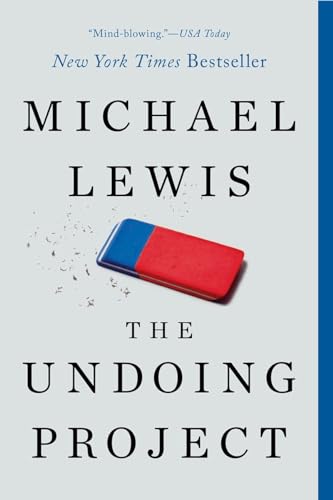 The Undoing Project: A Friendship That Changed Our Minds
Lewis provides a compelling narrative about the pioneering collaboration between trailblazers Dan...
This book provides a compelling narrative about the pioneering collaboration between trailblazers Daniel Kahneman and Amos Tversky, whose work laid the foundations of behavioral economics and our modern understanding of cognitive biases.
By exploring the insights and personal relationship between these two groundbreaking thinkers, business leaders can gain deeper appreciation for the psychological factors that shape decision-making, and how to overcome them.
13. “How to Decide: Simple Tools for Making Better Choices” by Annie Duke
 How to Decide: Simple Tools for Making Better Choices
The former poker pro translates the high-stakes decision mastery she honed at the table into a pr...
As a former professional poker player, Annie Duke has honed the art of high-stakes decision-making. In this book, she translates her expertise into a pragmatic framework that business leaders can apply to make better choices by accurately calculating uncertainties and risk.
Duke’s strategies help readers become more skilled at separating the knowable from the unknowable, a crucial skill for effective decision-making.
14. “Thinking in Bets: Making Smarter Decisions When You Don’t Have All the Facts” by Annie Duke
 Thinking in Bets: Making Smarter Decisions When You Don't Have All the Facts
Duke teaches decision-makers practical strategies and mental models to more accurately measure th...
In “Thinking in Bets,” former professional poker player Annie Duke shares her expertise in high-stakes decision-making to help readers become more skilled at navigating uncertainty and risk. Duke argues that we should view our decisions not as binary right or wrong outcomes, but as bets – situations where there is an element of chance involved, regardless of the quality of our decision-making process.
Drawing on her experiences at the poker table, as well as research in psychology and behavioral economics, Duke provides practical strategies and mental models for separating the knowable from the unknowable. She teaches readers how to more accurately assess probabilities, set appropriate boundaries around risk, and make decisions based on the information available rather than focusing solely on results.
By adopting a “betting” mindset, Duke empowers readers to make smarter choices, learn from mistakes, and improve decision-making over time. Her engaging, conversational style brings complex concepts to life through relatable anecdotes and actionable advice. “Thinking in Bets” is an invaluable resource for leaders, entrepreneurs, and anyone seeking to enhance their ability to make high-quality decisions under conditions of uncertainty.
15. “Creating Great Choices: A Leader’s Guide to Integrative Thinking” by Jennifer Riel and Roger L. Martin
 Creating Great Choices: A Leader's Guide to Integrative Thinking
This guide helps leaders apply integrative thinking to take a more holistic approach when facing ...
This guide helps business leaders apply the principles of integrative thinking to take a more holistic approach when facing complex choices. It equips them to creatively uncover new possibilities by synthesizing disparate ideas and data into powerful integrated solutions.
Integrative thinking is a valuable skill for leaders navigating ambiguity and seeking to develop innovative, comprehensive strategies for their organizations.
These books offer a diverse range of perspectives, frameworks, and strategies for improving decision-making skills. They cover topics such as cognitive biases, behavioral economics, probabilistic thinking, risk assessment, decision-making models, and integrative thinking.
How Decision-Making Books Can Help Business Leaders
This list of the best decision-making books offers invaluable benefits for business leaders looking to sharpen their strategic and analytical skills. By leveraging the insights and frameworks presented in these works, leaders can gain a deeper understanding of the cognitive biases, heuristics, and emotional factors that often influence decision-making.
Many of the books, such as “Thinking, Fast and Slow” by Daniel Kahneman, explore the dual systems of the mind. The fast, intuitive, and emotional thinking, as well as the slower, more deliberate, and logical thinking. Grasping these underlying psychological processes can help leaders make more objective and rational decisions, avoiding the pitfalls of common biases like confirmation bias or the sunk cost fallacy.
Beyond just identifying the cognitive traps, several books provide structured decision-making frameworks and models that leaders can apply in their organizations. Works like “Decisive” by the Heath brothers and “Creating Great Choices” by Jennifer Riel and Roger L. Martin equip readers with practical tools for navigating complex choices, considering multiple perspectives, and synthesizing disparate data into integrated solutions.
Enhancing strategic thinking is another key benefit of these decision-making books. By exploring concepts like probabilistic thinking, risk assessment, and the wisdom of crowds, leaders can develop a more critical, nuanced, and forward-looking approach to decision-making. Books such as “Superforecasting” by Philip E. Tetlock and Dan Gardner, and “Think Twice” by Michael J. Mauboussin, offer techniques for improving foresight and anticipating future outcomes.
Integrating emotional intelligence and intuition into the decision-making process is another crucial area covered by these books. Authors like Malcolm Gladwell, in “Blink,” demonstrate how snap judgments and instinctive thinking can sometimes outperform over-analysis, particularly in high-stakes and time-sensitive scenarios.
By embracing the insights and strategies presented in this curated selection of decision-making books, business leaders can cultivate a more holistic, rational, and effective approach to navigating the complex challenges and uncertainties they face.
Conclusion
From exploring the cognitive biases and heuristics that influence our judgment to developing robust decision-making models and frameworks, these books equip leaders with the tools and knowledge needed to make informed, rational, and effective choices.
They show us the importance of gathering and analyzing data, considering multiple perspectives, and trying to anticipate the potential outcomes and consequences of our decisions.
You’ll notice that most of these books also highlight the role of emotional intelligence, intuition, and ethical considerations in decision-making. They provide guidance on how to balance logic and instinct, and how to make tough decisions under pressure.
By reading these books, you’ll develop the confidence and competence to make sound decisions that drive results and create value for your organization.
Looking for something different? Check our different categories of Leadership Book Recommendations.